Digital arrest scam: how it works and how to stop it
No government agency arrests anyone over a phone or video call. Learn how the digital arrest scam works, the six steps that protect you, and how to report it on 1930.
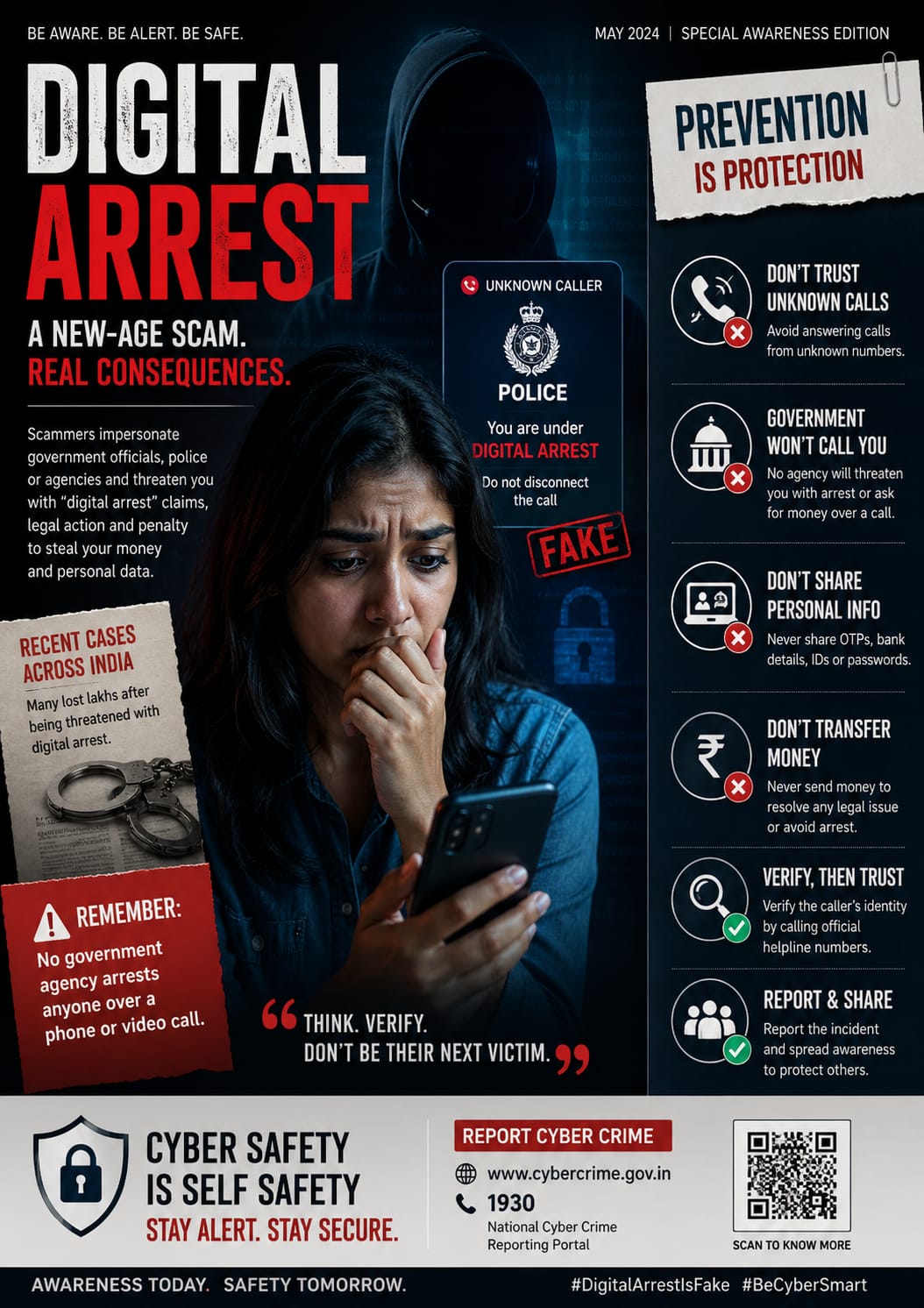
Be aware. Be alert. Be safe.
Digital arrest is a new-age scam with real consequences. Scammers impersonate government officials, police or agencies and threaten you with digital arrest claims, legal action and penalties, in order to steal your money and personal data.
Recent cases across India
Many people have lost lakhs of rupees after being threatened with digital arrest. The fraud works by manufacturing panic and then keeping the victim isolated on a video call so they cannot consult anyone who would recognise it.
Prevention is protection
Think. Verify. Do not be their next victim. These six habits stop the scam before it starts.
Step by step
- 1
Do not trust unknown calls
Avoid answering calls from unknown numbers, especially video calls from people claiming to be officials.
- 2
Government agencies will not call you
No agency will threaten you with arrest or ask for money over a call.
- 3
Do not share personal information
Never share OTPs, bank details, identity documents or passwords with a caller.
- 4
Do not transfer money
Never send money to resolve a legal issue or to avoid an arrest. Any such demand is a fraud.
- 5
Verify, then trust
Verify the caller identity independently by calling the official helpline number of the agency they claim to represent.
- 6
Report and share
Report the incident on 1930 or at cybercrime.gov.in, and tell others so they recognise the pattern.
Report cyber crime
Call the national helpline or file a report online. The first few hours matter most.