
Awareness
Cyberbullying and data breaches: how to recognise them and protect yourself
Words online can hurt real lives, and a single breach can expose everything about you. A two-part guide to recognising cyberbullying, supporting others, and protecting your personal data.
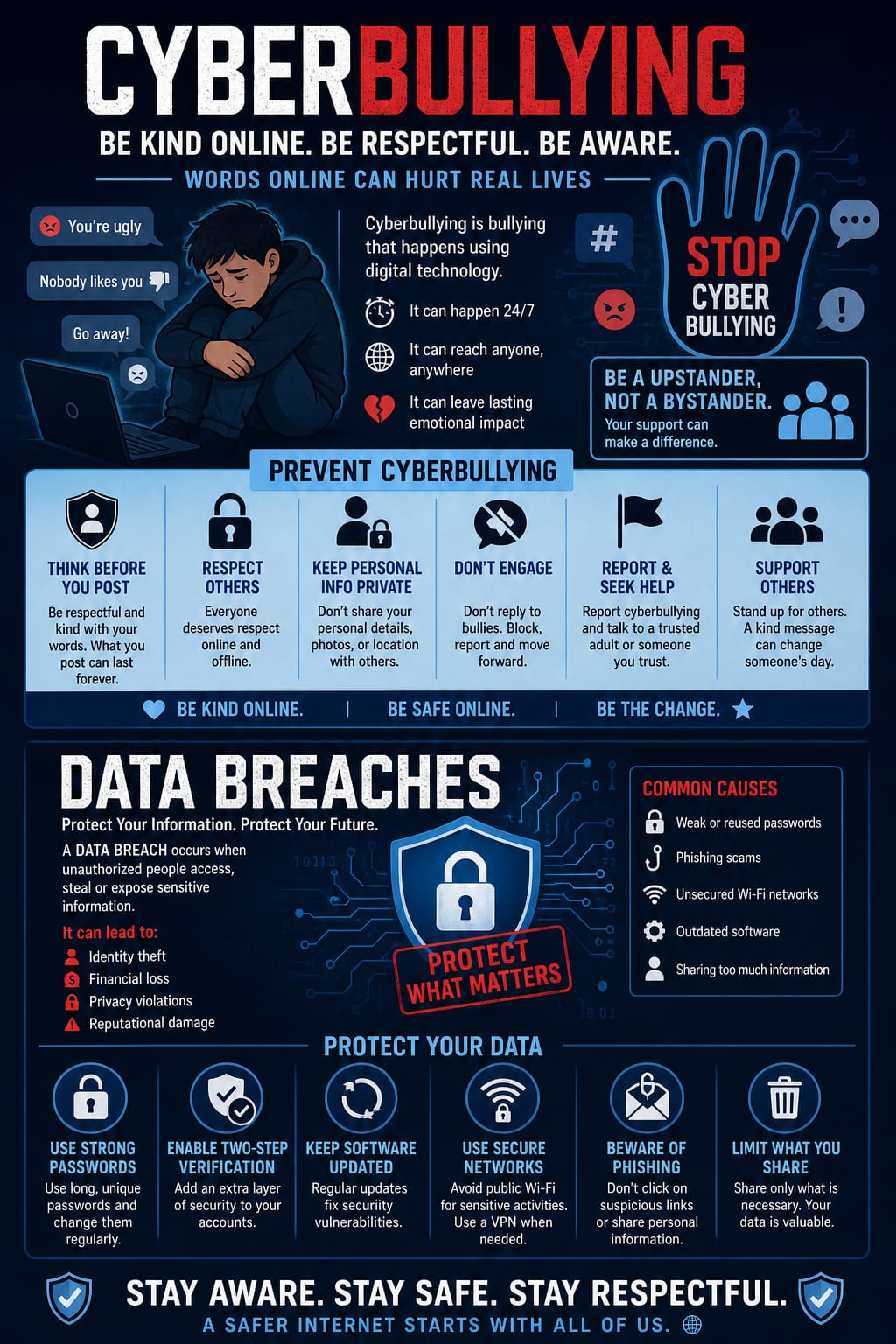
Cyberbullying: words online can hurt real lives
Cyberbullying is bullying that happens using digital technology. It can happen 24/7, it can reach anyone anywhere, and it can leave a lasting emotional impact.
How to prevent cyberbullying
- Think before you post — be respectful and kind with your words. What you post can last forever.
- Respect others — everyone deserves respect online and offline.
- Keep personal info private — do not share your personal details, photos or location with others.
- Do not engage — do not reply to bullies. Block, report and move forward.
- Report and seek help — report cyberbullying and talk to a trusted adult or someone you trust.
- Support others — stand up for others. A kind message can change someone's day.
Data breaches: protect your information, protect your future
A data breach occurs when unauthorised people access, steal or expose sensitive information. It can lead to identity theft, financial loss, privacy violations and reputational damage.
Common causes of a data breach
- Weak or reused passwords
- Phishing scams
- Unsecured Wi-Fi networks
- Outdated software
- Sharing too much information
How to protect your data
- Use strong passwords — long, unique, and changed regularly.
- Enable two-step verification to add an extra layer of security.
- Keep software updated, because updates fix security vulnerabilities.
- Use secure networks and avoid public Wi-Fi for sensitive activities.
- Beware of phishing — do not click suspicious links or share personal information.
- Limit what you share. Your data is valuable.
Report cyber crime
Call the national helpline or file a report online. The first few hours matter most.